Tuesday, 12 April 2011

CIPR provides invaluable social media resource

CIPR revises social media guidelines as it unveils blog portal for PR firms

 
 The Chartered Institute of Public Relations (CIPR) has launched updated social media guidance for the PR industry as it unveils a new blog space for PR firms
Jane Wilson: Revised guidance for using social media includes core principles and best practice
 
The guidance has been revised to include core principles, best practice and legal considerations to take into account when developing and implementing communications campaigns that include social media.

It comes as the CIPR launches The Conversation, a portal which allows the PR industry to view posts made by PR firms via their own websites.

A CIPR spokesman said: 'Syndicating your personal or company blog is an easy process, allowing the wider PR community to find your content, find your personal, business and consultancy profiles, and respond to your news and points of view. Everyone is welcome to register themselves and their organisation.'

Revisions to the social media guidance were overseen by the CIPR social media panel. CIPR members and the wider profession were also consulted.
CIPR CEO Jane Wilson said: 'With the balance of power between consumers and brands and the traditional routes to target audiences rapidly changing, the PR profession is in the unique position to lead the way.

'In this constantly innovating environment we have updated our guidance, to keep members informed and up to date on how they can best incorporate new developments in social media into their communications strategy.'

From PR Week

Thursday, 17 February 2011

Why professional PR has become vital for voluntary and charitable organisations

The reality for many charity and voluntary groups today is that they battle for survival within a fiercely competitive market. Today's bleak economic climate, causing funding bodies to make significant cut backs, means the competition is only going to grow.

Unfortunately, long gone are the days where a big pot of funds was divided accordingly and handed out to all charitable organisations which needed support. The current situation means charities are having to do more and more to secure funds, gain support and attract volunteers, not to mention service-users.

In all likelihood the charities which will flourish in the future are those with high visibility and enhanced profiles. On a national scale organisations such as OXFAM and Breakthrough Breast Cancer continue to thrive, at local level charities like the St Nicholas Hospice and The Tree House Appeal have been very successful in the East of England.

A common theme running through all these groups is that they have a high profile and regularly secure positive publicity, hence attracting further support and forging stronger influence when bidding for funds.

Professionally implemented PR tactics and communications activities can help charities in a number of ways. For example promotional activities can help to raise awareness and understanding of the organisation and the work it does and media campaigns can be used to attract supporters, service users and volunteers or to help raise funds.

The charities and voluntary groups which promote the work they do are the ones which are likely to survive in the long term. One of the most effective ways for any organisations to promote itself is via clear and concise communications and professionally implemented PR activities.

Patrick Lowman is a former journalist with more than 15 years experience in the PR and communications industry. He has worked with many public sector and charitable organisations helping them to maximise their PR and communication activities.
For a free consultation please contact Patrick Lowman on 01787 370120 or 07792 428555 or by email at patrick_lowman@sky.com
In the meantime please take a look at his website at  www.patricklowman.com

Tuesday, 7 December 2010

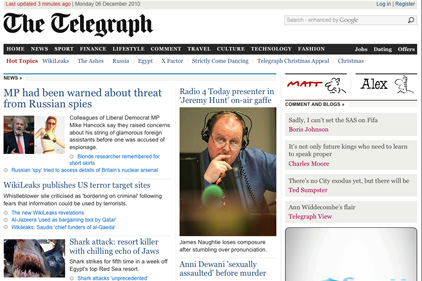
The increasing use of pay walls will put more onus on PR professionals to give readers specialist content, according to industry experts.


Preparing to implement a pay wall: The Telegraph
 
Preparing to implement a pay wall: The Telegraph
KPMG research published this morning revealed that when web users were asked whether they would continue using a news site they visited regularly if it set up a pay wall, a mere 10% said that they would, while 79% said that they would not continue using the site.

With The Telegraph reportedly investigating the option of a pay wall for its content and The Times having made the same decision in May this year, PR chiefs have foreseen a growing challenge for the industry.

Sacha Deshmukh, chief executive of MHP, said: ‘I think that the Telegraph and Times taking a lead points to a general direction. I think we are going to see increasing use of pay walls, and the test on whether they succeed will be whether the sites have specialist enough content to justify the payment. If anything, therefore, PROs will become increasingly important, so long as they work closely with the titles to help them to create the specialist content that readers will want to see.'

Brendon Craigie, UK managing director at Hotwire PR, added: ‘We are at an impasse, with media brands competing to provide consumers with a 24-hour diet of news and analysis, while trying to uphold high journalistic standards against a backdrop of ferocious global competition. In this situation savvy media companies are realising that they must identify and hold on to their core market even if it means charging them more to deliver what they want.

‘While behind early innovators like the FT, The Telegraph is right to pursue this strategy as more and more consumers move to digital consumption of their favourite media, it is the right time to be asking for them to pay for this convenience. Ultimately, however, pay walls are only as successful as the quality and uniqueness of the content on offer.’


Coming soon: The press release is not dead


Friday, 26 November 2010

Digital advertising - the debate goes on, but some clearly need further convincing

Advertisers have called for greater investment in research from media owners and agencies to help them to justify increased spend on digital media.

Big Digital Debate: call for greater investment in research
 
Speaking at last Friday’s Big Digital Debate, created by News International and organised by Haymarket Brand Media, Sarah Power, the marketing director of Burger King UK & Ireland, said: "I’d like to see more qualitative data – the problem with digital data is that it doesn’t give you anything about the consumer. I’d like to see fewer graphs and more focus on real consumers interacting with our ads."

David Hilton, the marketing director at Sony Ericsson, and also part of the panel debating in front of an audience of clients and agency people, added: "I’m frustrated with the notion that all things digital are measurable because they’re not and, even when they are, it’s not always useful."

Other issues raised at the debate, which also featured panel members including Stephen Haines, the UK commercial director at Facebook and Alex Hole, the digital commercial director at News International, included the impact of the introduction of paid-for content online.

Hole argued that NI’s paywall introduction across The Times online content was potentially increasing the value of its audience for advertisers: "Response rates and click-throughs [on ads] have gone through the roof. We have seen increased rates of 100% to 180%, which shows the value of the paid-for subscriber."

However, Hilton seemed more sceptical over the value of a paid-for online product against free. He said: "It’s early days for paid-content [online] and I’m not sure it’s important to us whether it’s paid for or not, or that it’s about value versus volume. It’s the most relevant context I want my brand to be in."

The panel, also including Grant Millar, the managing director of Vizeum, and Daren Rubins, the managing director of PHD, went on to debate subjects such as the value of peer-to-peer marketing, alongside, or against, paid-for advertising, and the need for advertisers and agencies to implement integrated structures.

A feature-length report on the event will run in the 3 December issue of Campaign.
 
(By Ian Darby, Campaign)


Tuesday, 23 November 2010

BBC leads online influence and survey suggests business leaders still see tradtional media as more influential than social media

The BBC stands head and shoulders above online rivals when it comes to shaping opinions on business reputations, while The Times' impact has dropped off in the year it introduced a paywall.

Influential: BBC website
 
The TLG Thought Leadership Index 2010 surveyed 1,000 business leaders, representing media, comms, politics, charities and corporates. It found more than half (51 per cent) of those polled in the UK thought the BBC website had the most influence over the way companies were perceived.

The Financial Times' website came in second (26 per cent), while The Times site, gated since 25 May, took third place with six per cent.

Commenting on the findings, Jon McLeod, UK chairman corporate comms and public affairs at Weber Shandwick, said: 'The Times suffers from perceptions that it is influenced by a Murdoch agenda, and that will get worse for Sky if it is bought out by News Corporation. The reputation of news providers is key when it comes to business leaders' perceptions of how coverage shapes views.'
Pete Goold, managing director of Punch Communications, added: 'From a search-oriented PR perspective, the decision to move The Times behind a paywall has ultimately limited its effectiveness as a source of links that are fully effective within a search campaign - whereas the BBC remains as much a prized source of link generation as it does for traditional PR.'

Despite the immediacy of online news, it is television that has the most power to alter corporate reputations.

Almost two-thirds (63 per cent) of those polled in the UK picked TV as the most powerful medium, compared with 50 per cent of respondents in the US.
The survey also found that the rapid developments in social media have yet to usurp more traditional platforms in terms of corporate reputation. Just seven per cent of UK respondents felt social media sites, such as Twitter, had the most influence on business reputation.

Jonathan Oliver, TLG's director of media relations, said: 'Social media, especially Twitter, now need to be part of any comprehensive media strategy.
'Over the past year, the "Twittersphere" has demonstrated its power to break stories and damage reputations. But used in the right way, social media can also help build corporate brands.'

How I see it

- Catherine May, Group director of corporate affairs, Centrica
I'm not surprised about the influence the BBC continues to have. Programmes such as Watchdog as well as the news give it amazing influence. But we are seeing huge markets for other types of media. These are exciting times and new strategies of comms are what makes our jobs interesting.

- Paul Charles, Chief operating officer, Lewis PR
Broadcast media are so much more immediate than print outlets and carry huge credibility, especially the BBC, which will always be seen as impartial. Despite the findings, social media sites are starting to have traction in altering brand reputation.

Survey results - Who has the most influence on business reputation,
according to the TLG survey

63% think television has the most impact on business reputation
24% believe print has the most impact on business reputation
7% say social media have the most impact on business reputation
3% think online news has the most impact on business reputation
*Source: TLG Thought Leadership Index 2010.

Print news
The Economist 3%
The Guardian 4%
The Daily Telegraph 11%
The Times 23%
Financial Times 53%
Other 6%

Online news
The Economist 5%
The Times 6%
Financial Times 26%
BBC 51%
Other 12%

UK social media
YouTube 14%
Other 17%
Twitter 37%
Facebook 32%

(from PR week)

Monday, 22 November 2010

Even the Royals need good PR, maybe more than anyone else?

With polls over the weekend showing the majority of the population want Prince William and Kate Middleton to become king and queen, rather than Prince Charles and The Duchess of Cornwall, PR chiefs have urged royals to 'stick together' on comms to avoid any suggestion of rifts.
'Team together': Royal family
A YouGov poll found 56% of those surveyed thought William would make a better king than his father and two-thirds believed William's choice to marry a ‘commoner’ in Kate Middleton would make the monarchy more relevant.
But James Herring, managing partner at Taylor Herring Public Relations, told PRWeek: ‘The royals need to stick together and avoid any game playing as the media seem to be attempting to drive a wedge between Charles and William. The royal family will always have to struggle with criticism about their relevance so now is certainly not the time for rifts or division.
‘This should be used as an opportunity to remind the public and the world of the value the royal family brings to the country.'
But the Prime Minister David Cameron has been praised after yesterday he was forced to defend Camilla in an interview with Sky News. Following a comment from Prince Charles that Camilla could be queen consort if he ascended to the throne, Cameron described himself as ‘a big Camilla fan’ and added: ‘I think the country is getting to know her and getting to see she is a very big warm-hearted person with a sense of humour and a big heart.’
Phil Hall, chairman of PHA Media, said: ‘David Cameron has been very shrewd, as his comments could not have roused any controversy. William and Kate could not disapprove of a positive statement like this. He was clearly very well briefed.
‘There are so many surveys suggesting Charles should stand down, but the Palace must support Charles 100%. He has made it clear he thinks he has a right to be king. These surveys are just an attempt to sell newspapers  - because of William’s young age it is not surprising the public are going to connect with him.'


(From PR Week)

Sunday, 21 November 2010

The benefits of PR

Introduction
Most people have heard about the power of PR, but many are still unsure about the benefits it can bring. This simple guide will show why PR can transform the fortunes of any business, large or small.
The reason why PR is one of the world's fastest growing industries is because it works. All research shows successful PR campaigns are much more effective than advertising and many other marketing techniques, and usually for a much smaller investment.

PR is about building reputations; furthermore it is about enhancing and protecting those reputations. PR spreads messages about your organisation and what it does. It can be used to raise the profile of a new product, to gain the trust of the public or patients or to increase awareness and understanding between key stakeholders and other interested parties, most notably potential new customers.
Just as importantly, PR can be used to counter-act negative publicity, misunderstanding or criticism, in some cases it can even serve to avert the pre-mentioned scenarios.
Commissioning a PR professional will ensure your messages are seen where you need them to be seen, helping you to achieve your key organisational aims and objectives and ultimately profits.
The power of PR
The media is the most powerful developer of reputations. Coverage in the media will shape the way your customers perceive you. The media has no competitor in this respect. Put simply, if you want people to believe in you, make sure the press believes in you first.

Whether you’re a brand new company, or launching a new product, or an established player trying to challenge the monopoly of market leaders, media endorsement can make or break your business objectives.

PR versus advertising
When it comes to comparing powerful advertising and a successful PR campaign, there’s only one winner. Editorial endorsement is the greatest stimulant a business can experience. Ask any successful business what the X-factor in marketing is, and they’ll tell you: “X = PR”.

Whether its through TV or radio coverage or column inches the neutral independent sanction of the press is far more powerful than any paid for advertisement or word of mouth recommendation. An editorial is the ultimate advert.

PR consultants make certain that your company and its messages are communicated to the media in the most effective way, ensuring not only that the journalist covers you, but also that the coverage reflects you in the best possible light.

PR is a far more cost-effective tool than advertising. One positive endorsement in a high circulation title or in several smaller publications can raise profile wider than any other marketing technique. If you’re a trade operation, positive coverage can stimulate direct enquiries, and will make your business targets more responsive to your sales and marketing campaigns.

The benefits of PR
Over a period of time good PR strategies will enhance and protect the reputation of your organisation and its services and products. A good reputation means people are more likely to:

·         Have confidence in your services or products
·         Purchase or use your services or products
·         Be persuaded by your messages
·         Be supportive of your aims and objectives
·         To recommend others
·         To take you seriously and respect your views
·         Remain loyal to you

However, PR activities and press coverage doesn’t just stoke sales, it develops market-wide interest in your business and brand.

For example it will provide senior staff with access to speaker opportunities and to influential, decision-making bodies and networking groups.

Newspapers, conference organisers and other media and marketing channels are constantly on the lookout for experts, either for speaker platforms or to join panels, think tanks or other types of event. Press coverage helps position businesses and organisaitions as expert leaders in their fields, often leading to them being invited to participate in various events.

Substantial media coverage can also help to keep staff motivated and committed as it communicates the company is going places and is on the move. Just as importantly, press coverage often stimulates interest from prospective employees. Companies often witness an increase in hits on the recruitment section of their website – and the arrival of new CVs - immediately after coverage appears.

Due to the ever expanding digital age PR is spanning wider than it has been possible through the traditional media. Social media and blogging sites, chat rooms, websites, emails, podcasts and various other digital and online platforms allows businesses to spread their key messages to a global audience.

PR is also one of the most effective weapons in SEO (Search Engine Optimisation) on search engines, and is proving to be one of the most effective resources in helping companies command the highest possible rankings, hence driving significant traffic flows to their website.

Conclusion
Public relations offers several advantages not found with other promotional options. Audiences view media outlets as independent sources. Therefore a positive story about a service or product in the business section of a local newspaper will have a far greater impact on readers than a full-page advertisement as it will be viewed by the readers as a huge endorsement.

Also, depending on the media outlet, a story mentioning a company may be picked up by a large number of additional media, thus, spreading a single story to many locations.

Of course Public Relations (PR) isn’t just about securing coverage in the media. A host of other tried and tested PR techniques can be used to spread powerful and productive messages. Print and email newsletters, information brochures, flyers, posters, presentations, speeches and stakeholder events are just some of the other PR routes available.

Finally, in many cases public relations objectives can be achieved at favourable cost when compared to other promotional efforts.

Coming soon: The press release is not dead!

http://www.patricklowman.com/